

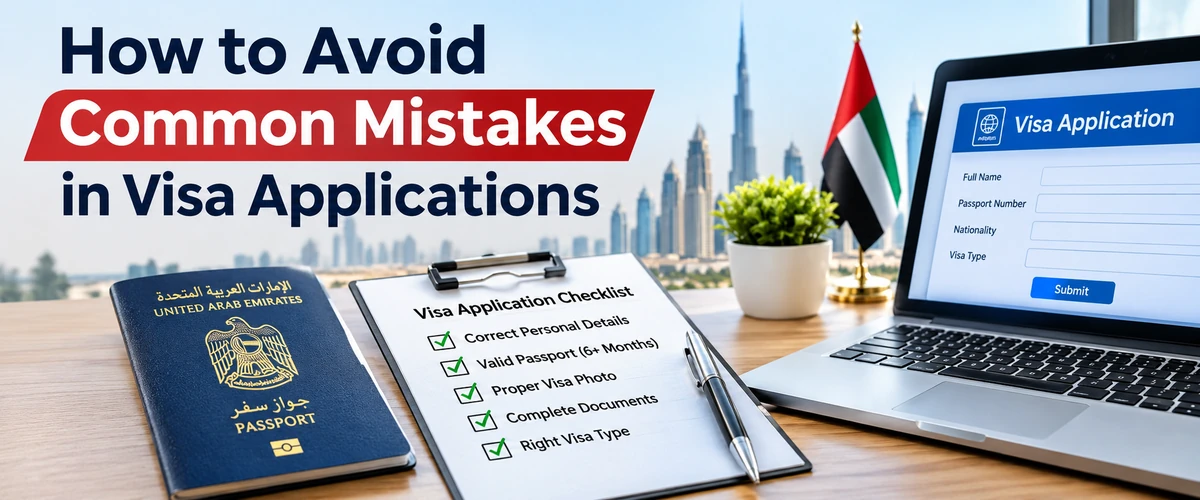
Introduction
A visa can decide whether a holiday, a family visit or a new job goes ahead as planned. Yet many applications are delayed or refused because of small, avoidable errors. Some travel agents have reported that around 6% of the visa requests they handled were rejected, compared with about 1% earlier.
That makes careful preparation more important than ever. The good news is that most of these mistakes are easy to prevent once you know what to look for.
This guide explains the most common mistakes people make with a visa application, with a focus on the UAE, and shows you how to avoid each one.
1. Names and Details That Do Not Match
This is one of the most common problems. UAE systems cross-check your name, passport number, date of birth, nationality and gender.
Even a name written in a different order, or an old passport number, can cause an automatic failure. Missing middle names, wrong surname order and different spellings are frequent examples.
The fix is simple. Copy every detail exactly as it appears in your passport, letter by letter, and check it again before you submit. A single wrong letter can be enough to trigger a visa rejection. Pay special attention to names in languages that use a different alphabet, as spellings can easily change from one document to another.
If someone else is filling in the form for you, such as a travel agent, PRO service provider or HR team, ask them to send you a copy to check before it goes in.
2. Passport Problems
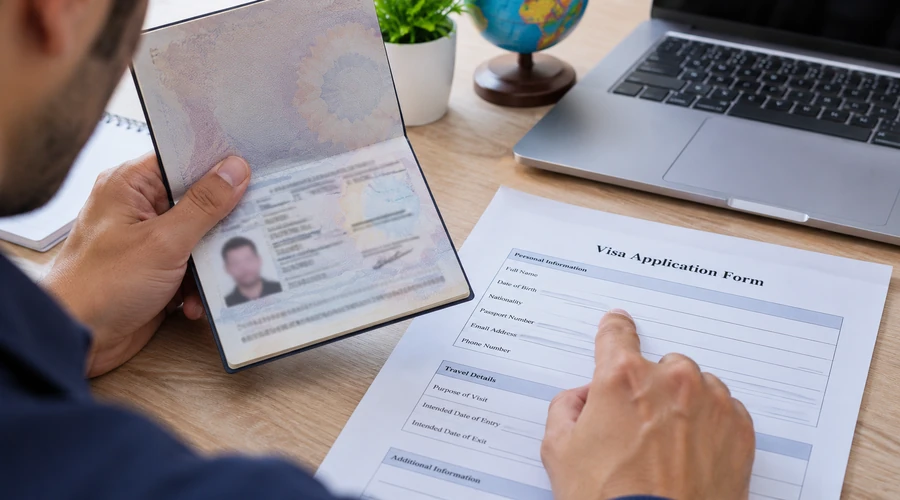
Passport validity is one of the first things officials check. Your passport must be valid for at least six months from your travel or application date. Damage can also cause trouble.
Passports with physical damage, handwritten changes or unclear scans of the machine-readable zone can be rejected. Check your passport before you start any application.
If it is close to expiry or in poor condition, renew it first. Make sure the passport you use to apply is the same one you will travel with. If you travel often, set a reminder a year before expiry so passport validity never becomes a last-minute problem.
3. Wrong or Poor-Quality Photos
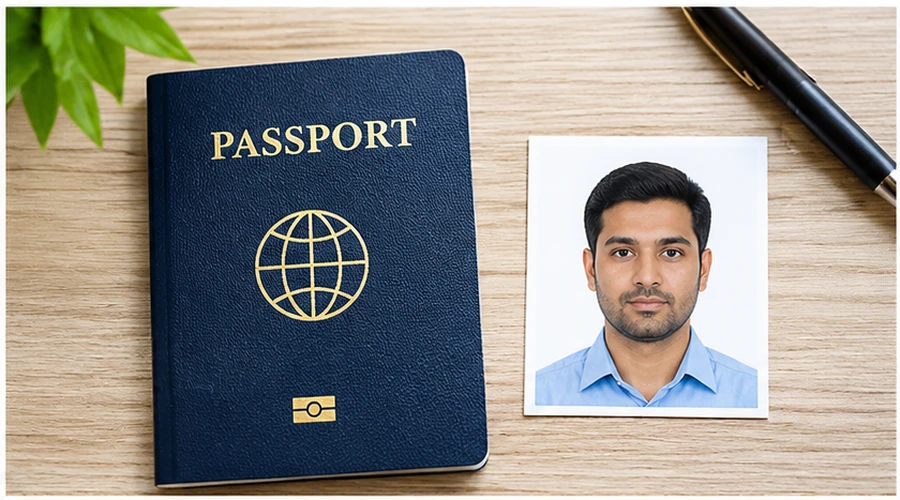
Photos cause many avoidable delays. A visa photo should be clear, in full colour and taken against a white background. A cropped selfie will not do.
Photo Rule |
Common Mistake |
|
White background |
Coloured walls or patterned backgrounds |
|
Clear, recent image |
Old, blurry or edited photos |
|
Face fully visible |
Shadows, glare or tinted glasses |
|
Correct size and format |
Cropped phone selfies |
|
Neutral expression |
Smiling widely or tilting the head |
Use a professional studio if you are unsure. The small cost is far less than the time lost on a rejected application.
Do not wear headwear unless it is for religious reasons, and keep your face clearly visible. Keep a digital copy of your approved visa photo, as you may need it again for other applications.
4. Incomplete or Low-Quality Documents
Missing papers are one of the top reasons for refusal. Incomplete or unclear paperwork is often named as a leading cause. Low-resolution scans, cropped pages, blurry images and missing attestations can also lead to delays or refusals.
A few simple habits help:
• Scan every page in full colour at high resolution
• Make sure all four corners of each page are visible
• Name files clearly, such as “passport_front”
• Check that certificates are attested when required
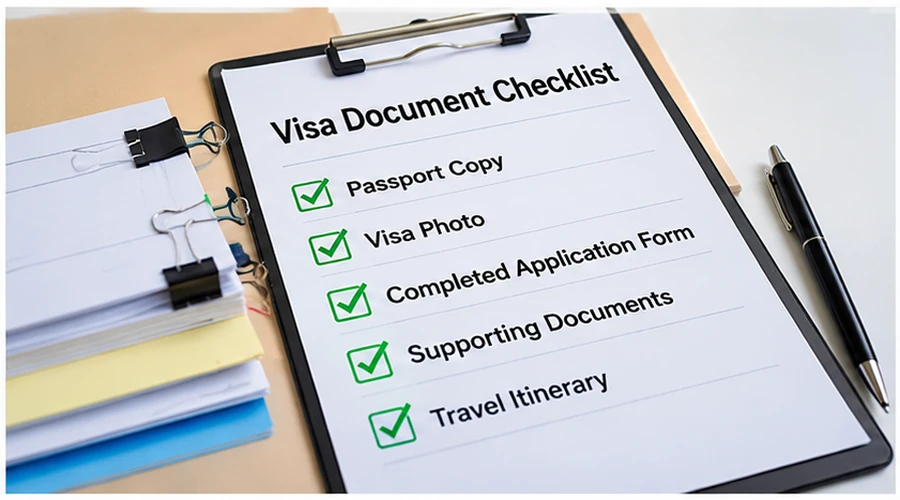
Before you click submit, compare your documents with the official checklist for your visa application one by one.
Keep all your scanned documents in one folder on your phone or computer, so you can find them quickly if officials ask for more. If a document is in another language, check whether a certified translation is needed.
5. Choosing the Wrong Visa Type
Every visa has a purpose. Applying for a visit visa while you plan to work, or a tourist visa for business, can lead to a rejection due to a purpose mismatch. Rejected government fees are usually not refunded. So choosing the wrong type wastes both time and money.
If you are not sure which visa fits your plans, ask your employer, sponsor or a licensed typing centre before applying.
Your visa type also affects how long you can stay and whether you can extend. Picking the right one from the start keeps your options open.
6. Missing Travel and Stay Details
For a UAE visit visa, officials want to see that your trip is planned and that you will leave on time. Bank statements or cash of around AED 2,500 to AED 3,000 may be requested as proof of funds. A UAE guarantor’s Emirates ID and tenancy contract can sometimes replace a flight and hotel booking.
This usually means:
• A confirmed return or onward ticket
• A hotel booking or your host’s address
• Your host’s Emirates ID and tenancy contract, if staying with family or friends
• Proof of funds, if requested
Carry printed copies of your return ticket, accommodation details and proof of funds when you travel.
Make sure your ticket and hotel dates match the dates in your application, as different dates can raise questions. If your plans change after applying, update your bookings and keep the new copies handy.
7. Forgetting Rules for Children
Applications for minors need extra care. Both parents’ full details and written consent are required for applicants under 18. Applications without this information are often not approved.
If one parent is not travelling, check what extra consent documents are needed. Missing parental details are among the most common mistakes travel agents see. Children also need their own valid passport and a photo that meets the same rules as adults.
Keep copies of birth certificates and parents’ passports ready, as they are often requested for family applications.
8. Ignoring Your Immigration History
Past issues can block a new application. Unpaid overstay fines, an old visa that is still active or an unexplained earlier refusal can all cause problems.
Clear any outstanding fines, cancel previous visas and submit only one application for the same visa. Multiple applications for the same person can also slow down processing.
Timing matters as well. Wait at least one month after leaving the UAE before applying for a new UAE visit visa. Repeated short visits close together may draw extra checks.
Being honest about past refusals is always better than hiding them, as records are often linked. If you have had a refusal in the past, try to understand the reason before applying again.
9. Using the Wrong Portal
The UAE has different systems depending on the emirate. Dubai residence visas go through GDRFA, while visas issued in other emirates use ICP Smart Services.

Submitting through the wrong channel can return a blank result and waste time without showing the real problem. Dubai residents can also track their applications through the GDRFA website or app.
Bookmark the official sites so you always use the right link. Official apps also send updates when your status changes, so you do not miss a request for more documents.
Always use official websites and apps, or a licensed agent. Avoid unknown websites that charge extra fees or ask for unnecessary personal data.
10. Relying on Old Information
Visa rules can change with little notice. Requirements are updated often, so always check the current document list and fees on official UAE government sources before each submission. Advice from friends or old blog posts may be out of date.
What worked for someone last year may not work today. If you use an agent, ask them to confirm the latest requirements in writing.
Save the official pages you use, and check them again on the day you apply. This simple habit helps you avoid a visa rejection caused by outdated details.
If you are moving to start a company, our guide to the types of business licences in the UAE explains the first steps.
Quick Action Checklist:
Step |
What to Do |
|
Match your details |
Copy everything exactly from your passport |
|
Check your passport |
At least six months’ validity and no damage |
|
Use a proper photo |
Clear, colour image with a white background |
|
Prepare documents |
Full, clear scans and attestations if needed |
|
Choose the right visa |
Match the visa type to your real purpose |
|
Use official channels |
Apply through the correct government portal |
Conclusion
Most problems with a visa application are not about eligibility. They come from small details, such as a misspelt name, a poor photo or a missing document.
Check your passport, use a correct photo, choose the right visa type and apply through the right portal. Keep your documents clear, complete and up to date.
Whether it is your first trip or your tenth, the same simple checks apply.
Taking an extra hour to review everything can save you weeks of delay and a lot of stress. A careful visa application is the surest way to get approved the first time.